


Word Tiles - Word Puzzle Game
4.39.00 Reviews
App Specs
- Version
- 0.1.1
- Updated On
- License
- Free
- Downloads
- 10,000+
- Developer
- Hypervation
- Categories
- Word
- Platform
- Android
Screenshots
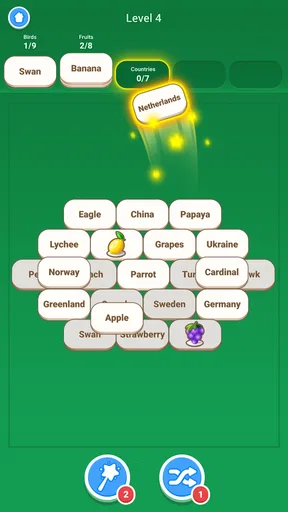
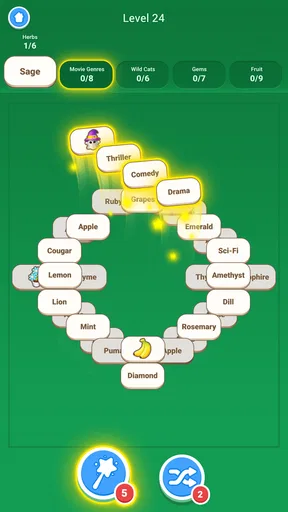
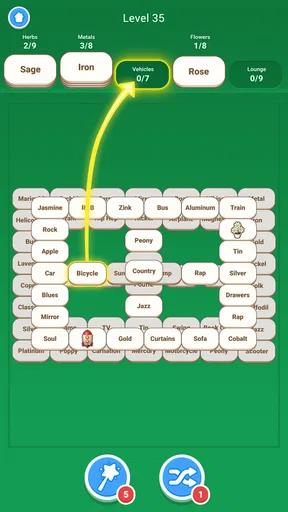
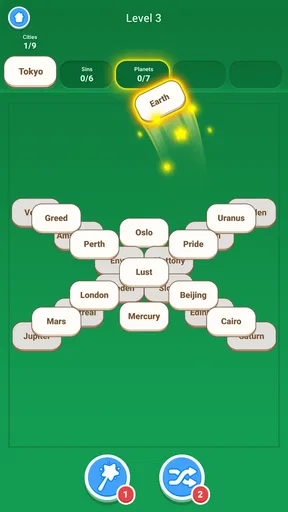
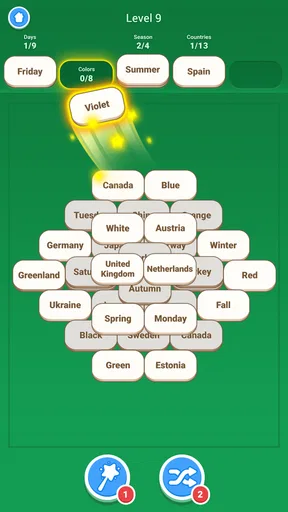
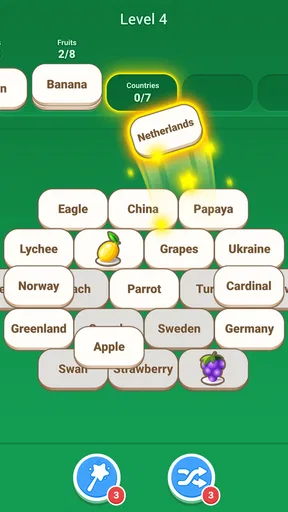
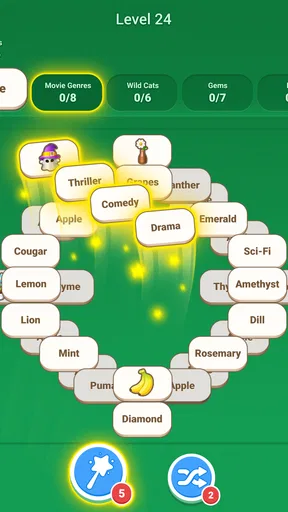
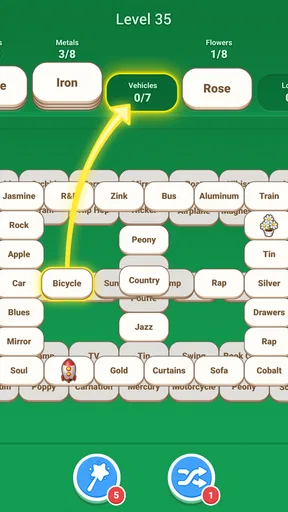
 Analysis by AppCompare
I tend to enjoy word games most when they give me something to think about without demanding a long, uninterrupted session. Word Tiles - Word Puzzle Game is a word-category puzzle from Hypervation, and its central idea is to sort words by the connection they share. That makes it a different kind of mental exercise from building words out of letters: the challenge is noticing a pattern, then deciding whether it really fits.
Where the first pause can happen
The basic premise is easy to understand, but spotting a category is not always immediate. A group of words may suggest several possible connections, and the satisfying part is narrowing them down rather than guessing quickly. I’d approach a difficult board by reading every word once, then looking for relationships across the whole set instead of committing to the first pair that seems related.
That small change in approach matters. If I fixate on one tempting connection, I can overlook a more precise grouping that explains several tiles at once. When I get stuck, I mentally name a possible category in plain language and test each word against it. If the explanation needs too many exceptions, it probably isn’t the intended link.
This style suits players who like lateral thinking and vocabulary, but it may frustrate anyone expecting a conventional word search or a spelling game. The puzzle is about classification, not simply finding hidden words. I’d keep that distinction in mind before downloading: the appeal comes from interpreting meaning and association, so a player who prefers fast tapping or action-heavy play may find the pace too thoughtful.
A low-pressure way to fit it into the day
I can picture using a category puzzle during a short break: open a board, scan the choices, make a few considered groupings, and put the phone down when attention is needed elsewhere. It asks for focus, but the thinking is easy to pause between attempts. That makes the format a natural fit for a waiting room or a quiet moment at home, rather than something I’d choose while walking or trying to follow a conversation.
For a useful routine, I’d avoid tapping through every plausible combination. First, sort the words into rough mental piles—perhaps things that share a setting, purpose, type, or phrase—and then check which pile has the clearest common rule. This is not a special in-game feature; it is simply a way to make a connection puzzle less dependent on random trial and error. It also makes the eventual solution more memorable.
The game is free and rated Everyone, so it may be suitable for a broad audience looking for a casual word challenge. That rating is not a promise that every puzzle will feel easy, though: the difficulty of a connection depends on a player’s vocabulary and familiarity with the ideas involved. I’d happily recommend the format to someone who enjoys explaining why a set belongs together, but I would steer a younger or less confident player toward playing alongside someone if a tricky grouping starts to feel discouraging.
Worth Reading Before You Choose

Flipboard Shows What News Apps Must Do Beyond the Feed

Switching to Android Auto Means Rethinking Your Driving Routine

Google Calendar Makes a Crowded Week Easier to Manage

Ludo King Makes the Most of the Minutes Between Plans

Baby Panda World Brings Quick Play to Modern Phones, but Its Game Library Feels Busy

ESPN’s Live Game View Makes Following Close Games Easier
Getting started and settling into the puzzle
Before judging a word game by a rough first session, I make a few simple checks. I confirm that the app is compatible with my device and that it has finished installing, then open it when I can give a puzzle my attention. Word Tiles is listed for Android 6.0 and later, and the current version is 0.1.0. If the game does not open or behaves unexpectedly, checking the device’s available storage, connection, and whether the app has completed its download is a sensible first step; those checks are general troubleshooting, not a guarantee that they will resolve every issue.
If a board seems confusing, I’d first separate the words I can explain confidently from the ones I cannot. Then I’d compare the uncertain tiles against more than one possible theme. This keeps a single misleading association from steering the whole attempt. A helpful self-check is to say the category aloud as a short rule and see whether it accounts for every member without stretching the meaning.
How it differs from familiar word games
Compared with a word search, this asks less about scanning a grid for a visible sequence and more about abstract relationships. Compared with a crossword, it does not depend on filling a specific answer from intersecting clues. And unlike a word-building game, the main test is not how many valid words I can make from available letters. I’m looking for the organizing idea that makes a set coherent.
That difference is a strength when I want variety from the usual vocabulary routine, but it is also a clear trade-off. Players who enjoy finding hidden patterns may find this more engaging than repetitive word searches. Those who like precise clues, dictionary definitions, or constructing long words may prefer a crossword or a spelling-focused alternative. The best choice depends on whether I want to reason about meaning or produce words directly.
Word Tiles has an average rating of 4.2 from around 25 ratings, with 10K+ installs, and it is free to play. I treat that as useful context rather than proof that it will suit every player: the number of ratings is still modest, and puzzle preferences are personal. Hypervation’s game is a focused option for people curious about grouping words, not a substitute for every kind of word-game experience.
Recovering when a session loses its flow
If I lose track of a puzzle after putting the phone down, I would reopen the game and take a fresh look at the words rather than assume I need to solve it from memory. I’d avoid making hurried choices just to regain momentum. A short reset—read the tiles again, identify the strongest connection, and test the remaining words against it—often gives me a clearer view than staring at the same doubtful pair.
If the game appears frozen or a tap seems not to register, I’d wait briefly, then close and reopen it if needed. I would also check whether the device is responding normally before deciding the puzzle itself is at fault. These are ordinary steps for an app that is not responding; they do not imply that a particular interruption or recovery feature is built into the game.
There is a useful distinction between being stuck and having a technical problem. A board that still responds but leaves me unsure about a category is a reasoning challenge. A screen that stops reacting points more toward an app or device issue. Treating those situations separately prevents me from repeatedly tapping an unresponsive screen or, in the other direction, restarting a puzzle simply because its connection is subtle.
When the trouble may be outside the game
Not every failed launch or sluggish moment is caused by the puzzle. An older device, limited free storage, an interrupted download, or a temporary system slowdown can affect many apps. I’d check whether other apps are working, restart the device if it is generally unresponsive, and make sure the installation has finished before trying again. If the problem persists, the sensible next step is to use the support route available through the app’s store page rather than guessing at a setting or changing unrelated device options.
I also wouldn’t assume that a particular connection is required for every part of play or that progress is saved in a specific way. Those details can matter if someone plans to play during a commute or switch devices, so I’d test the game in the situation I actually expect to use it. If dependable offline access or guaranteed cross-device progress is essential, a word game that clearly explains those capabilities would be a safer choice.
What the early version means for a player
Version 0.1.0 gives the game an early-stage feel in a practical sense: I would keep expectations measured and judge it by the puzzle experience I can access now, rather than assuming the depth or polish of a long-established series. That is not a claim about a particular missing feature. It is a reason to try a few sessions before making it a staple, especially if I usually want extensive customization or a large variety of modes from a word game.
Its release date is May 4, 2026, and the modest pool of ratings means I would not treat the average score as a settled consensus. I’d use the free download as a low-commitment way to see whether the category-solving format clicks. The key question is not whether I already love word games in general, but whether I enjoy weighing several meanings and finding the cleanest shared explanation.
Design, sound, and what I would watch for
When I assess a puzzle interface, I care most about whether the words are easy to read and whether the board lets me think without visual clutter. A restrained presentation can help a category puzzle because the mental work should come from the relationships, not from decoding decorative elements. I’d also keep sessions comfortable by adjusting the device’s own brightness and sound to suit the room rather than forcing myself to play through eye strain or distracting audio.
One trade-off with a simple word board is that repeated play can start to feel similar if a player wants lots of different activities in one app. The category mechanic is the point, so it will not satisfy someone seeking a broad collection of minigames. On the other hand, a focused format can be easier to return to: I know what kind of thinking I’m signing up for, and I can decide quickly whether I have the attention for it.
A practical recommendation
For me, Word Tiles - Word Puzzle Game is most appealing as a compact exercise in noticing connections. It is a good fit for a player who likes language, sorting, and the little moment of clarity when a group finally makes sense. I’d recommend trying it if that kind of reasoning sounds relaxing rather than demanding, and if a free, Everyone-rated game from Hypervation fits what you want on your phone.
I’d skip it—or choose a different word game—if I mainly want crosswords with explicit clues, fast word creation, a large range of modes, or a format that never asks me to sit with uncertainty. I would also avoid relying on it for offline play or device-to-device continuity until I had tested those needs directly. Those are not faults unique to this game; they are practical requirements that can make another title a better match.
My advice is to give the first few puzzles an unhurried try and focus on the reasoning, not on speed. If I enjoy testing a category against every word and revising an early guess, the central idea has room to keep me interested. If that process feels more like guesswork than discovery, there are plenty of other styles of word puzzle that may suit me better.
First Impressions
When I first downloaded Word Tiles - Word Puzzle Game, I was immediately drawn in by its clean and visually appealing interface. The layout is intuitive, making it easy for even the most technophobic among us to navigate. The app doesn’t bombard you with ads, which is a huge plus in my book. Instead, it lets you dive straight into the action with minimal fuss.
The Gameplay
So let's talk about the meat of the game: the puzzles. Each level presents you with a grid filled with letters, and your task is to form words by swiping through them. Sounds simple, right? But as you progress, the puzzles get trickier, and that's where the real fun begins. It’s like a mental gym where your brain gets a workout, and trust me, it’s incredibly satisfying when you finally crack a tough level.
The game also throws in bonus challenges and power-ups to keep things interesting. These little surprises are a great way to break the monotony and add an extra layer of excitement. The power-ups, like the "Word Bomb" or "Shuffle," can be game-changers when you’re stuck, adding a strategic element that I absolutely love.
Why It’s Addictive
What makes Word Tiles - Word Puzzle Game so addictive is its perfect balance between challenge and reward. Each level you complete feels like a small victory, and the game’s ability to gradually increase difficulty keeps you on your toes. Plus, there’s a sense of community with its leaderboard feature, where you can compete with friends or random players worldwide. There's nothing like a bit of friendly competition to keep you coming back for more!
Design and Sound
The design of the game is sleek and modern, with a soothing color palette that's easy on the eyes. It’s clear that the developers put a lot of thought into creating an environment that's both engaging and relaxing. The music and sound effects are subtle, providing just enough ambiance without being distracting. It's perfect for those late-night sessions when you just want to unwind.
Room for Improvement
While I’m a fan, no app is perfect. One area where Word Tiles - Word Puzzle Game could improve is in its hints system. Sometimes, the hints are a bit too cryptic, which can be frustrating when you're really stuck. A more detailed hint system would definitely enhance the gaming experience for many players.
Additionally, while the game’s minimalist design is a strength, a few more customization options—like themes or letter styles—might appeal to players looking to personalize their experience even more.
Final Thoughts
All in all, Word Tiles - Word Puzzle Game is a brilliant addition to the word game genre. It’s engaging, challenging, and perfect for anyone who loves to flex their mental muscles. Whether you’re a seasoned wordsmith or a casual player, this game has something for everyone. So if you're ready to dive into a world of letters and challenge your vocabulary skills, give it a go. You might just find yourself as hooked as I am!
Pros
- Engaging and challenging word puzzles.
- Intuitive and user-friendly interface.
- Offline play available for convenience.
- Regular updates with new levels.
- Enhances vocabulary and spelling skills.
Cons
- Contains in-app ads that can be intrusive.
- Some levels may feel repetitive.
- Limited hints without purchase.
- Occasional app crashes reported.
- Requires frequent updates for new content.
FAQs for Word Tiles - Word Puzzle Game
What is Word Tiles - Word Puzzle Game?
Word Tiles - Word Puzzle Game is a mobile application that challenges players to find and connect words from a grid of letters. It combines the fun of word search games with the strategy of puzzles, providing an engaging and educational experience for all ages. Available on both Android and iOS, it's perfect for those who love word games.
How does the game improve vocabulary skills?
Word Tiles enhances vocabulary by encouraging players to discover new words as they progress through levels. The game offers hints and definitions, helping players learn meanings and correct spellings. Regular play can significantly boost vocabulary, making it a great tool for language learners and word enthusiasts alike.
Are there in-app purchases in Word Tiles?
Yes, Word Tiles offers in-app purchases. Players can buy hints or remove ads to enhance their gaming experience. While the game is free to download and play, these optional purchases can make progressing through challenging levels easier and more enjoyable for users who prefer a smoother gameplay experience.
Is the game suitable for all age groups?
Word Tiles is designed to be accessible and enjoyable for players of all ages. The difficulty levels range from easy to challenging, ensuring that both young players and adults can find levels that suit their skills. Its educational nature makes it particularly beneficial for children, helping them develop language skills.
Can Word Tiles be played offline?
Yes, Word Tiles can be played offline, making it an excellent option for entertainment without the need for an internet connection. Players can enjoy the game on the go, whether during a commute or while traveling. Offline playability ensures uninterrupted gaming, regardless of network availability.


